Research
Biological systems achieve remarkable function by organizing chemistry and structure across scales. Our group develops light-guided additive manufacturing strategies that bring this principle to biological, edible, and biocompatible materials. We use illumination not only to shape materials, but also to control the chemistries and architectures from which function emerges. Our goal is to manufacture programmable matter, materials whose composition, structure, and behavior are encoded during fabrication for applications in food, medicine, soft materials, and bioinspired devices.
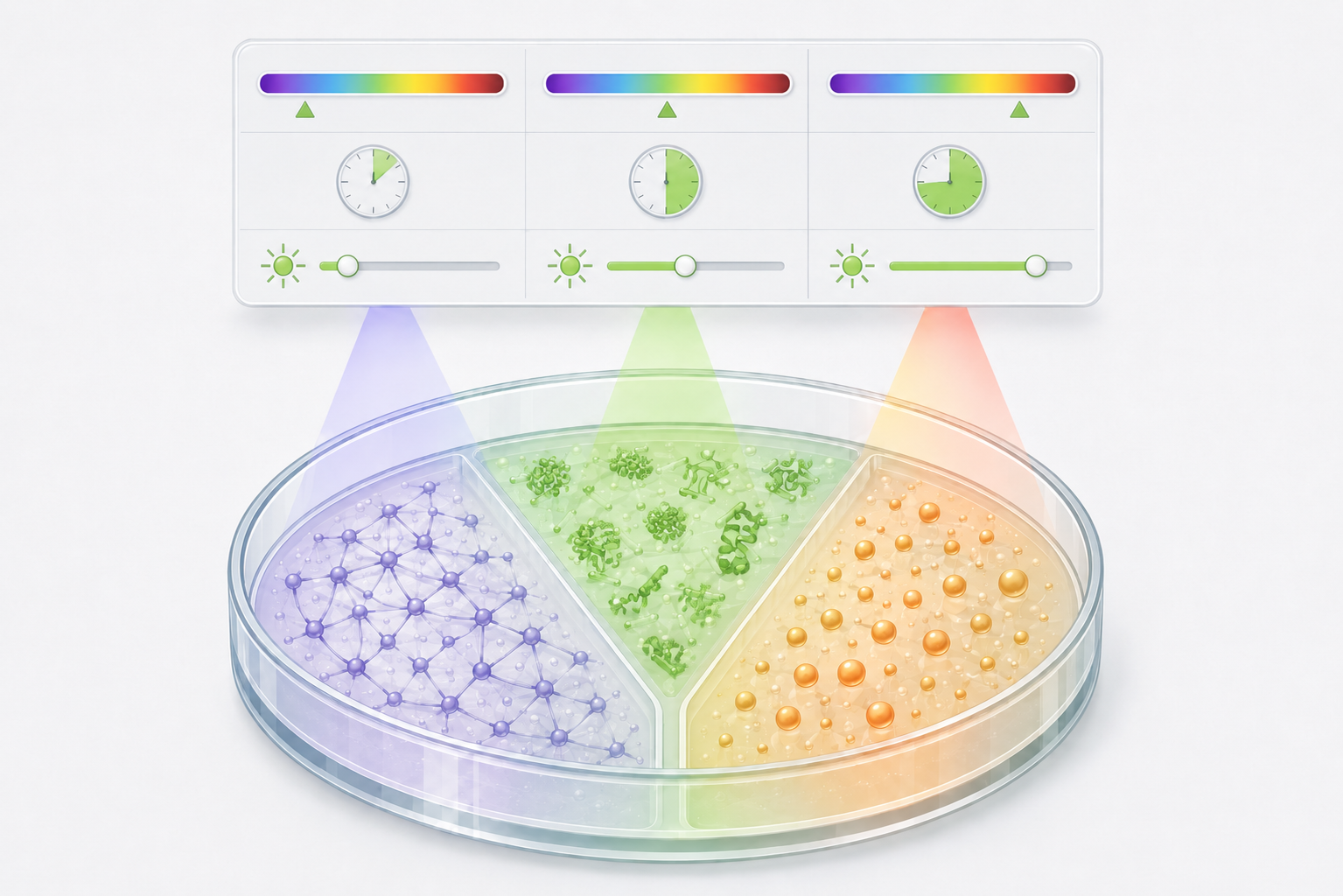
Many photopolymerization platforms rely on synthetic monomers, chemically modified biopolymers, or initiator systems that are not well-suited to edible or physiologically relevant materials. We develop light-driven chemistries that expand the range of biological and biocompatible substrates that can be crosslinked, solidified, or patterned under controlled illumination.
Related publications →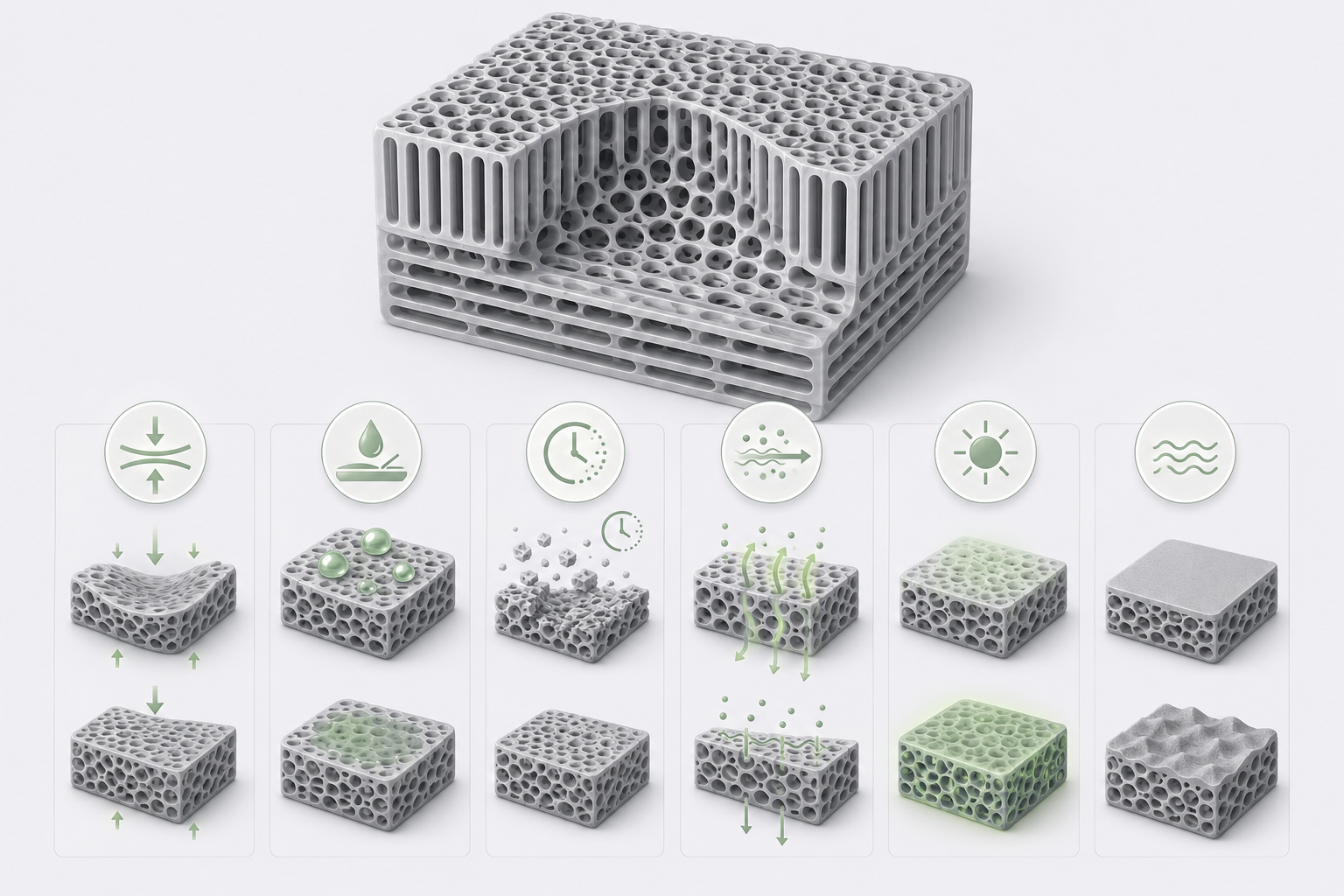
Material performance is governed by chemistry and structure across scales. We study how manufacturing parameters determine material architecture, and how this architecture controls properties such as mechanics, wettability, degradation, mass transport, optics, texture, and more.
Related publications →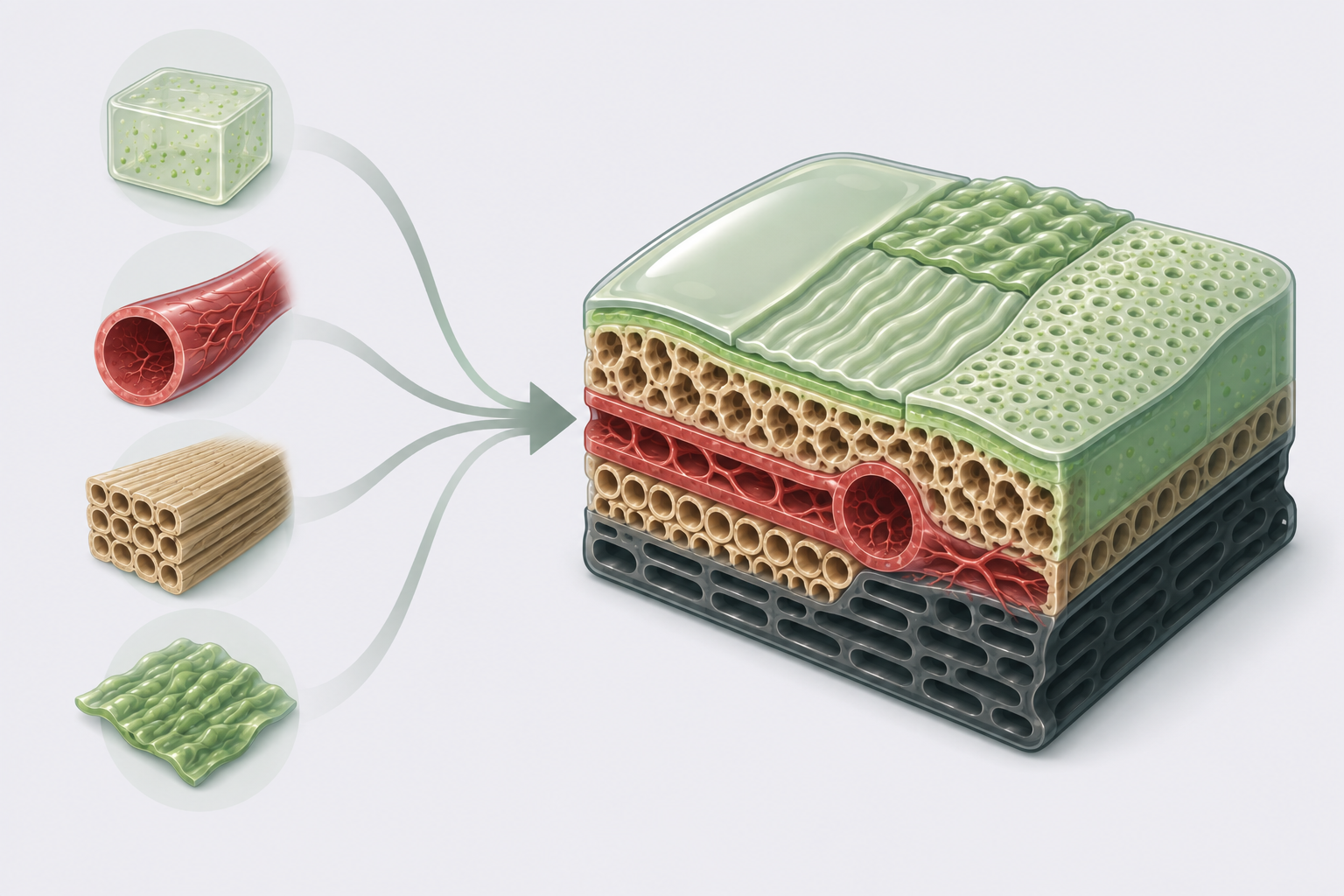
Natural systems rarely rely on a single material. We create multi-material architectures inspired by the hierarchical organization of natural systems. Our additive manufacturing strategies combine distinct materials, chemistries, and structures within single objects to build edible, biomedical, and adaptive systems.